
Skip to content

Product tour

A screen-by-screen walk through RAGBot, in roughly the order you'll meet each page. Use it as a visual map — every screenshot here is the real app.

Signing in

You start at the sign-in screen. New users create an account and verify their email first; see Accounts & signing in.
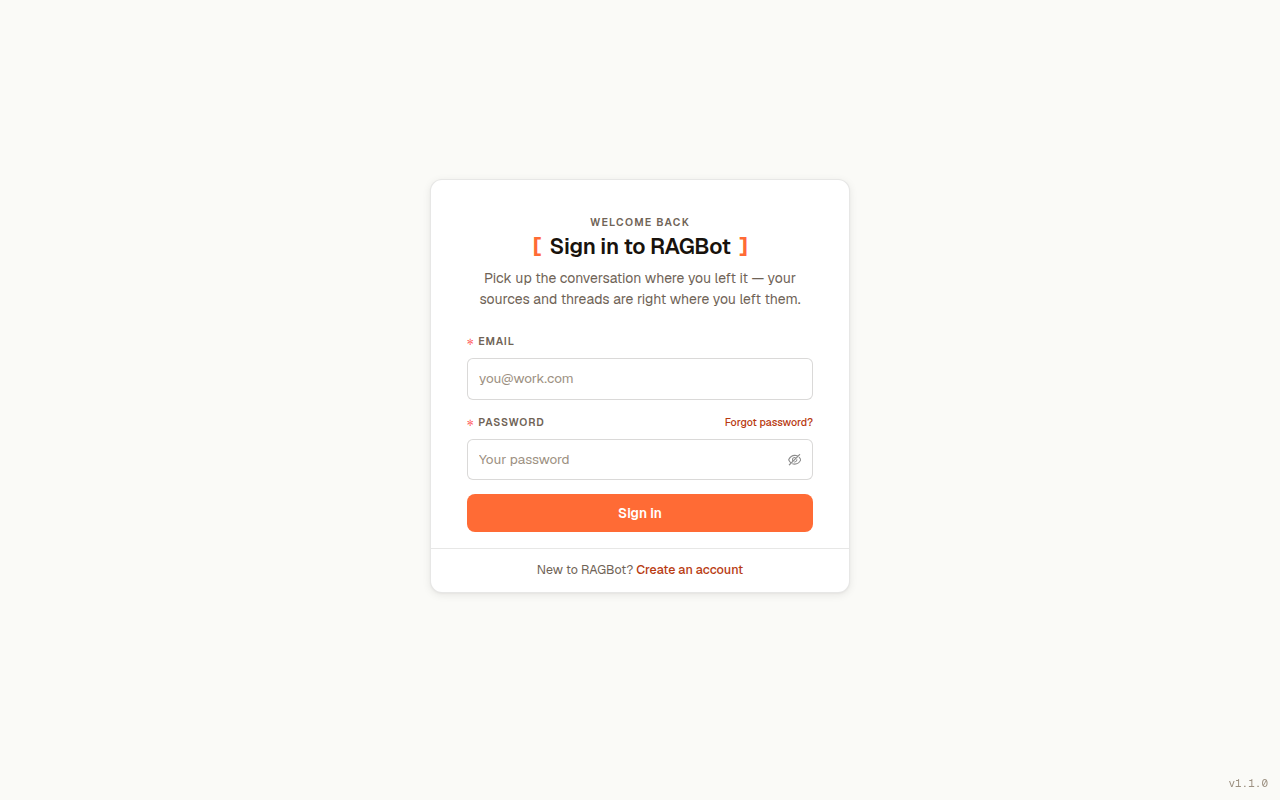
Sign in
Sign-in screen with links to create an account and reset a forgotten password.
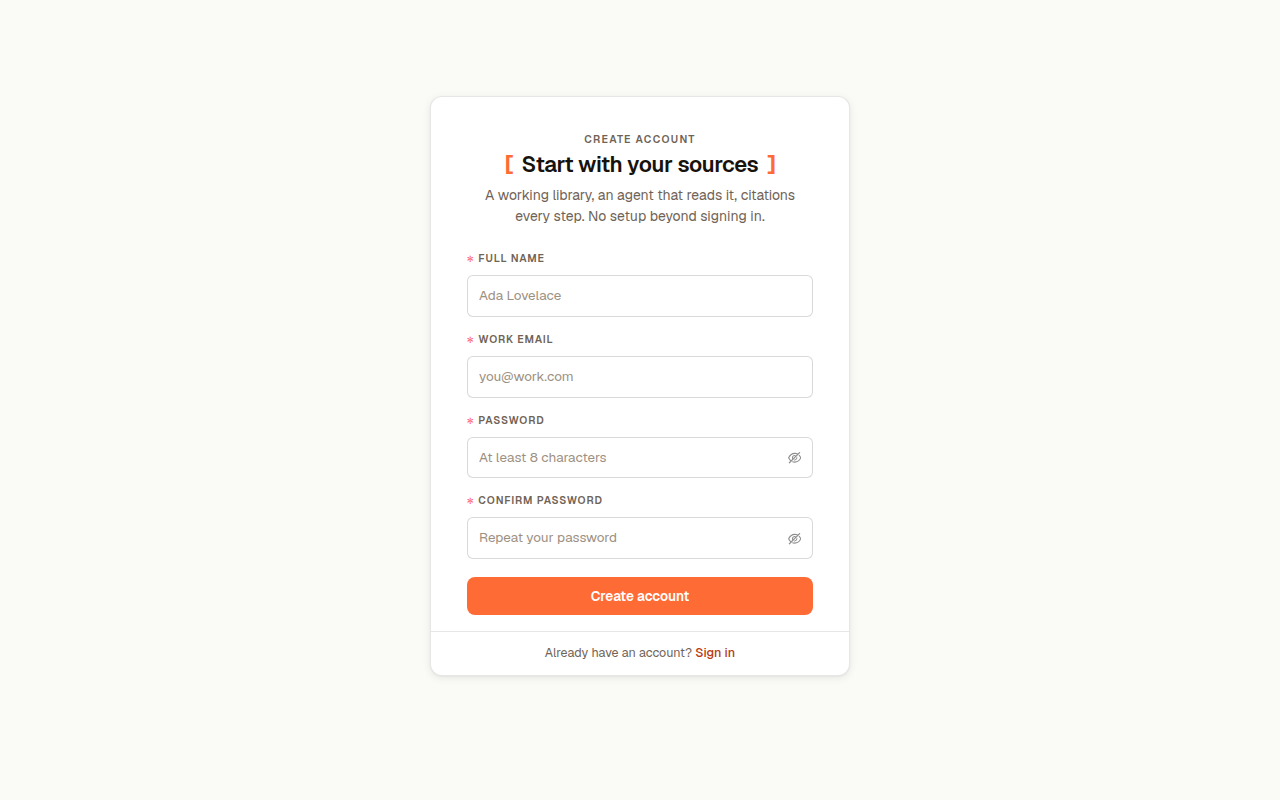
Create account
Sign-up: full name, work email, and a password entered twice.
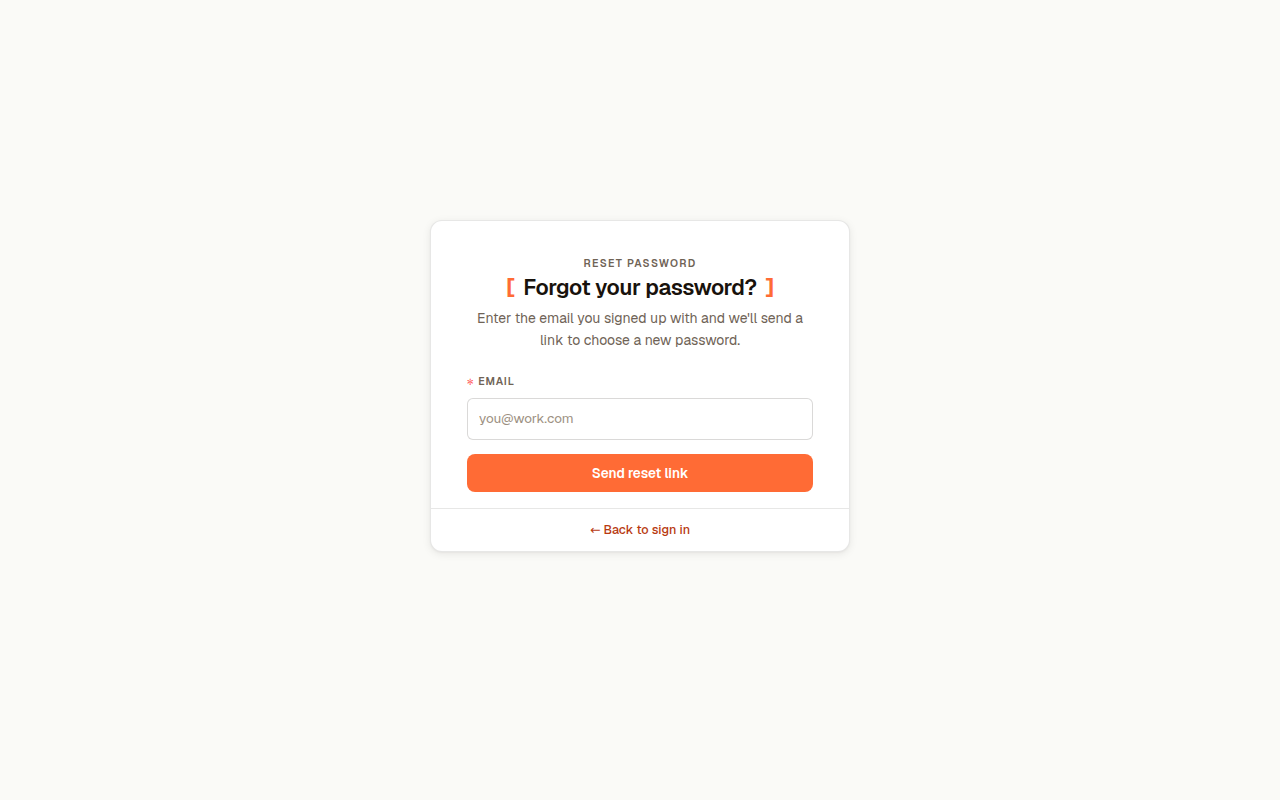
Reset password
Forgot your password? Enter your email to receive a reset link.

Workspaces

After signing in you land on your workspaces — the sealed spaces that hold everything. Pick one to enter it, or create a new one.
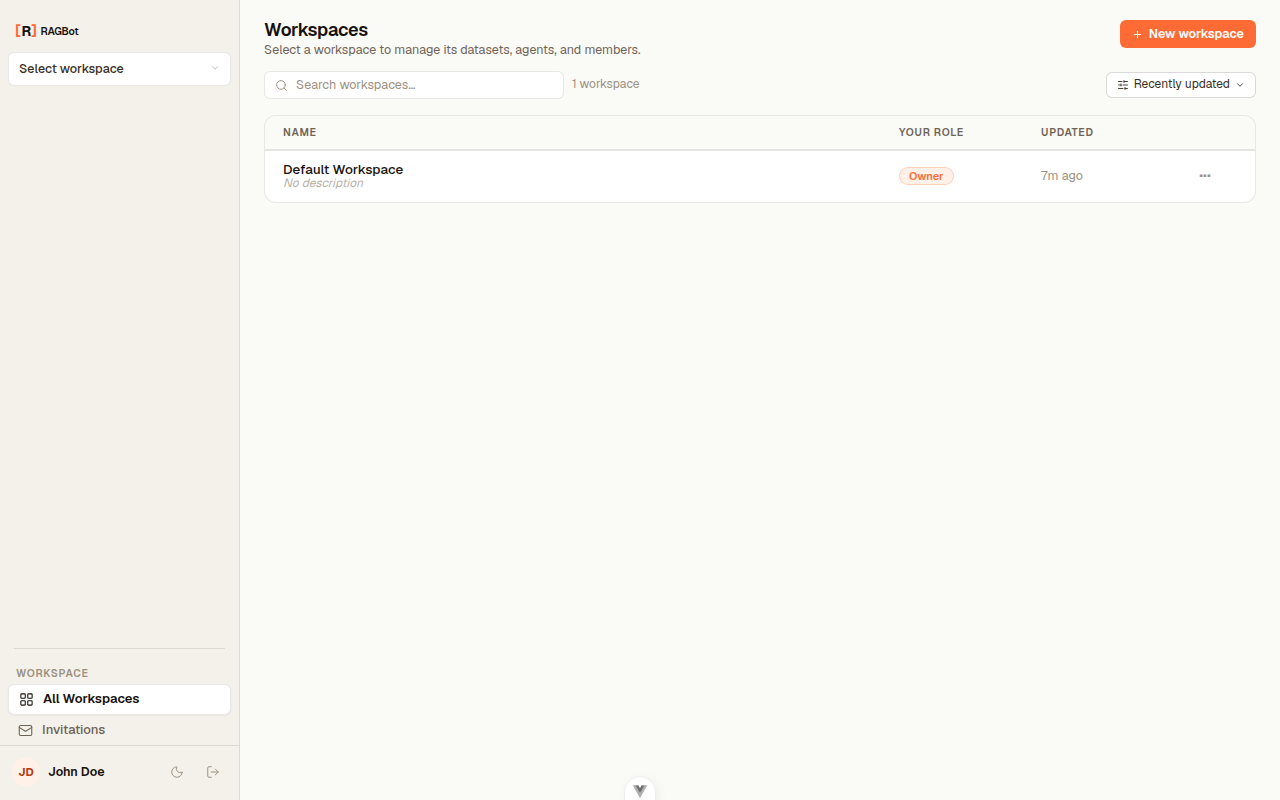
Workspaces
The workspaces list, with your role and last-updated time per workspace.
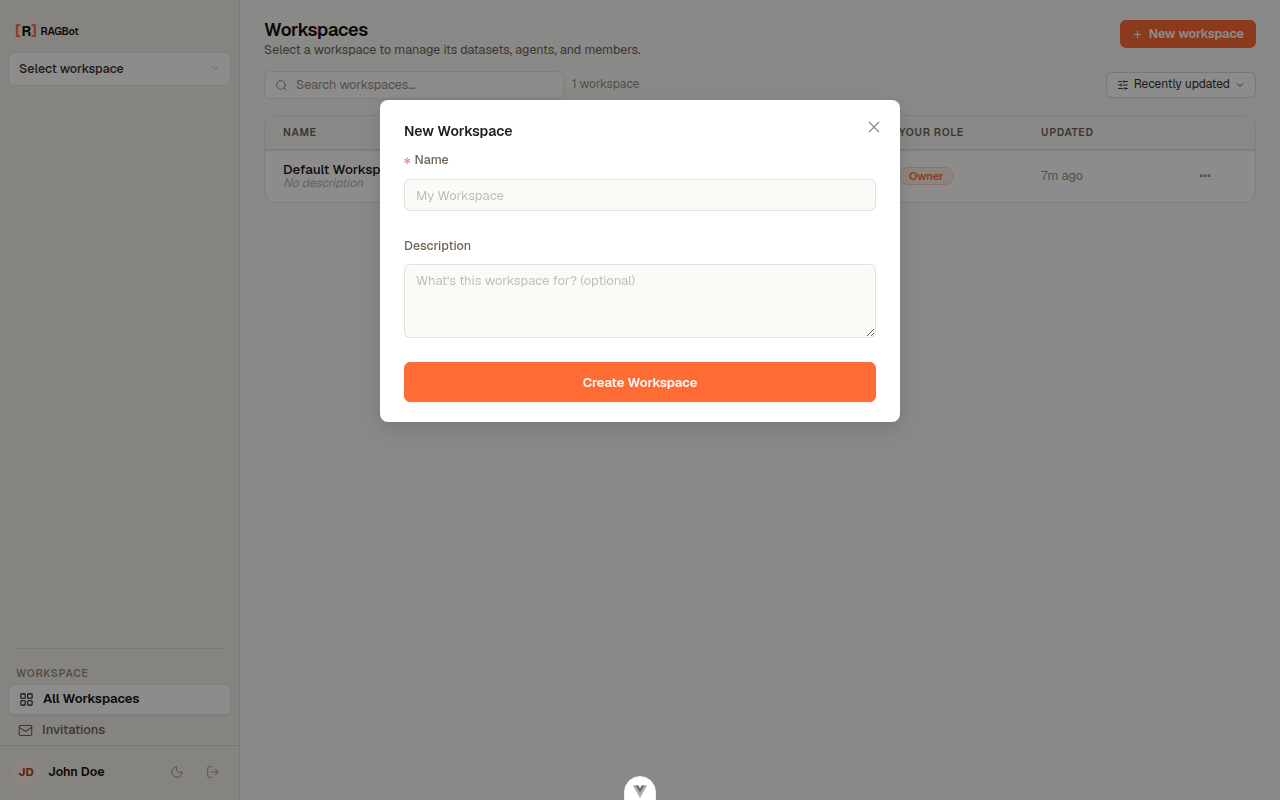
New workspace
Creating a workspace — just a name and optional description. You become its Owner.

First time here?

Brand-new users who don't belong to any workspace yet are walked through a short onboarding wizard — welcome, create a workspace, invite teammates, add a source, and meet your agent. Once you have a workspace, the app takes you straight to it instead. See the full Onboarding walkthrough.
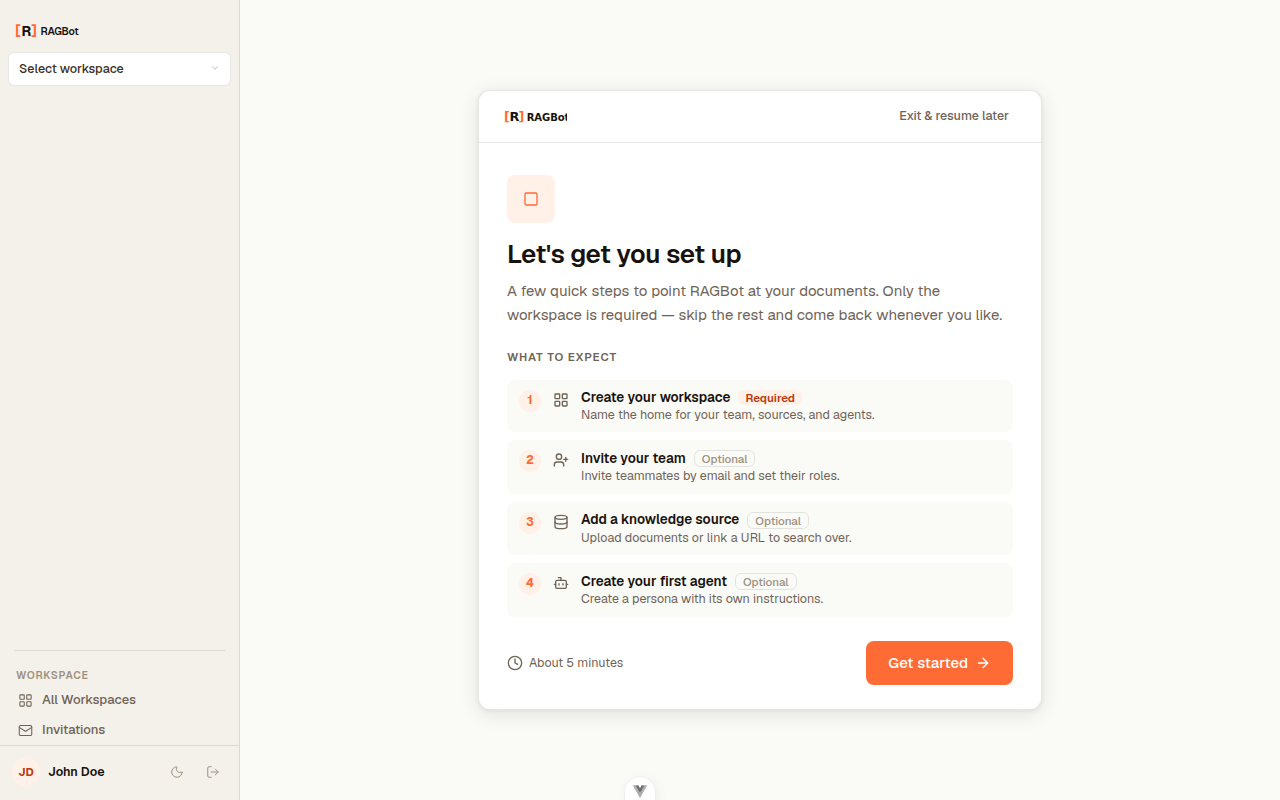
Onboarding
The first-run wizard's welcome screen. Returning users with a workspace skip straight to it.

Datasets

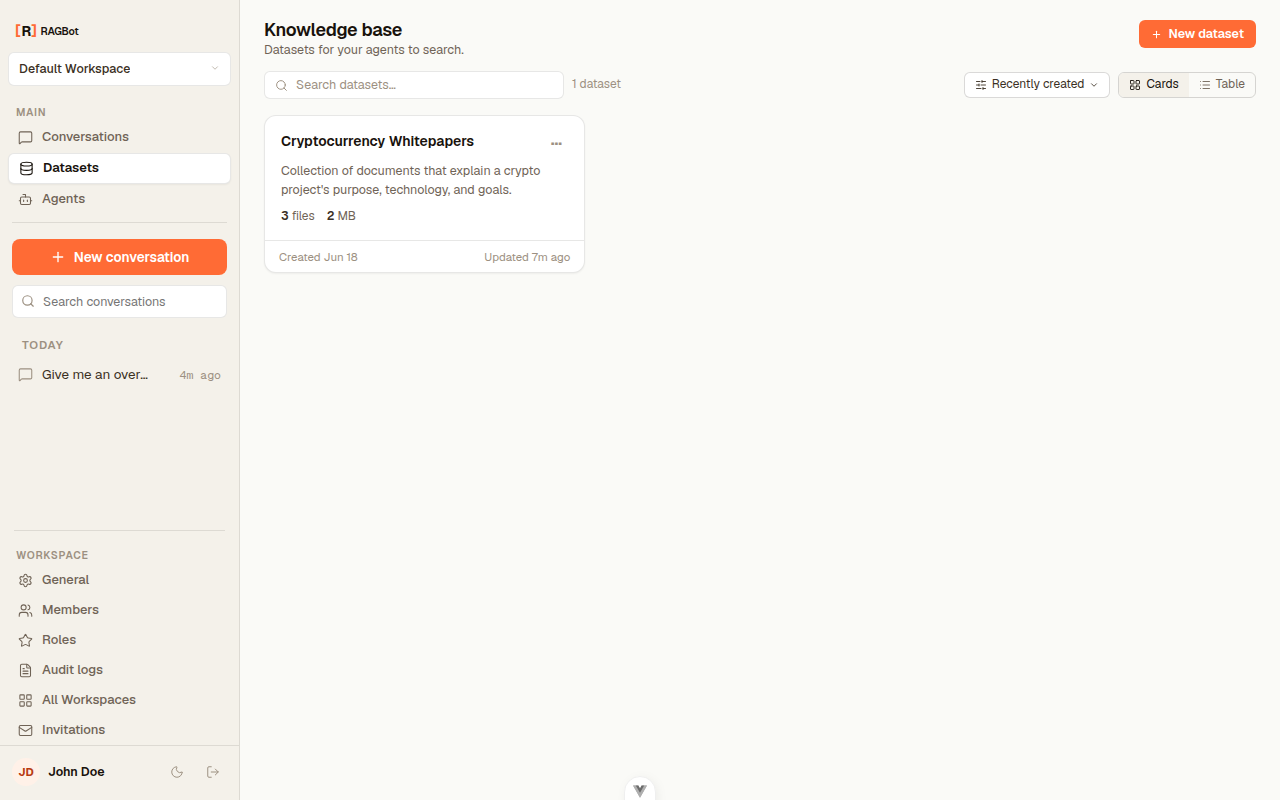
Inside a workspace, Datasets is your knowledge base. Browse as cards or a table, search, and sort.
Datasets
The Datasets area.
The Datasets area.
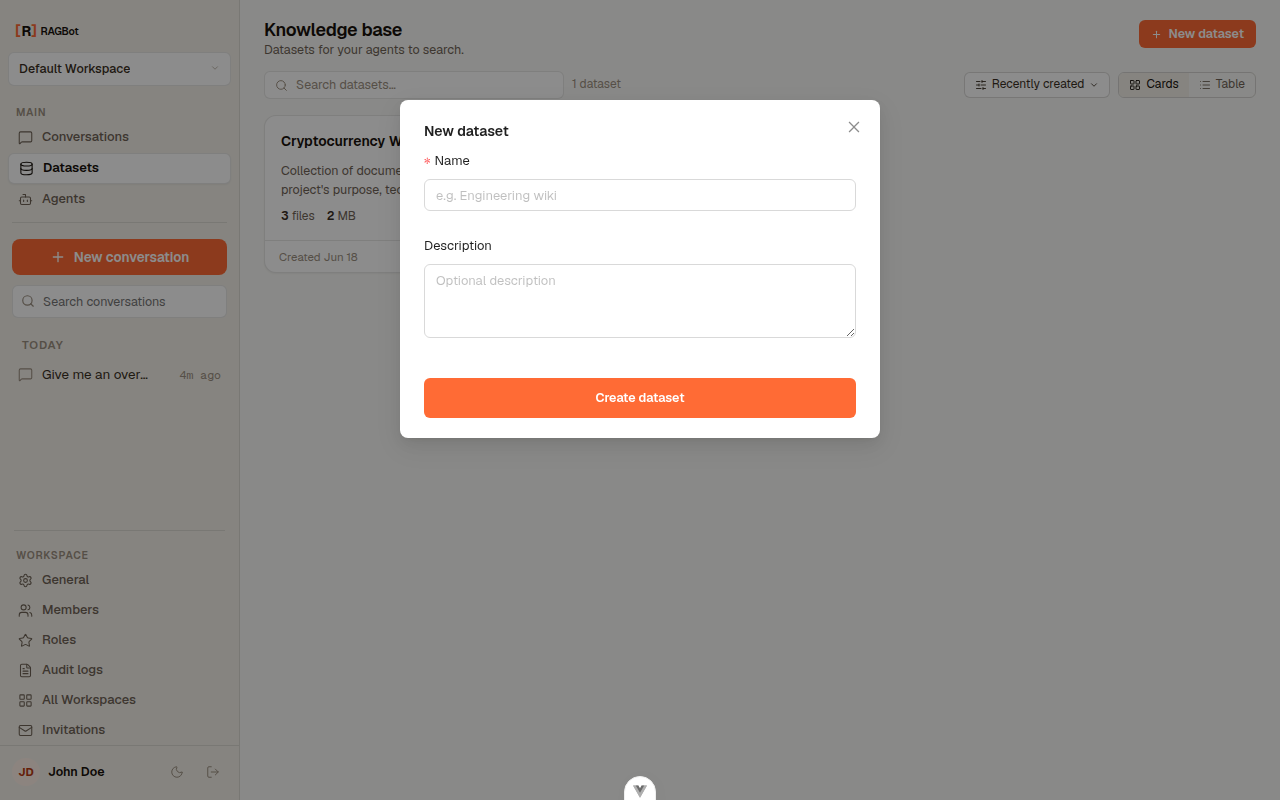
New dataset
Creating a dataset — a name and optional description; you add files next.

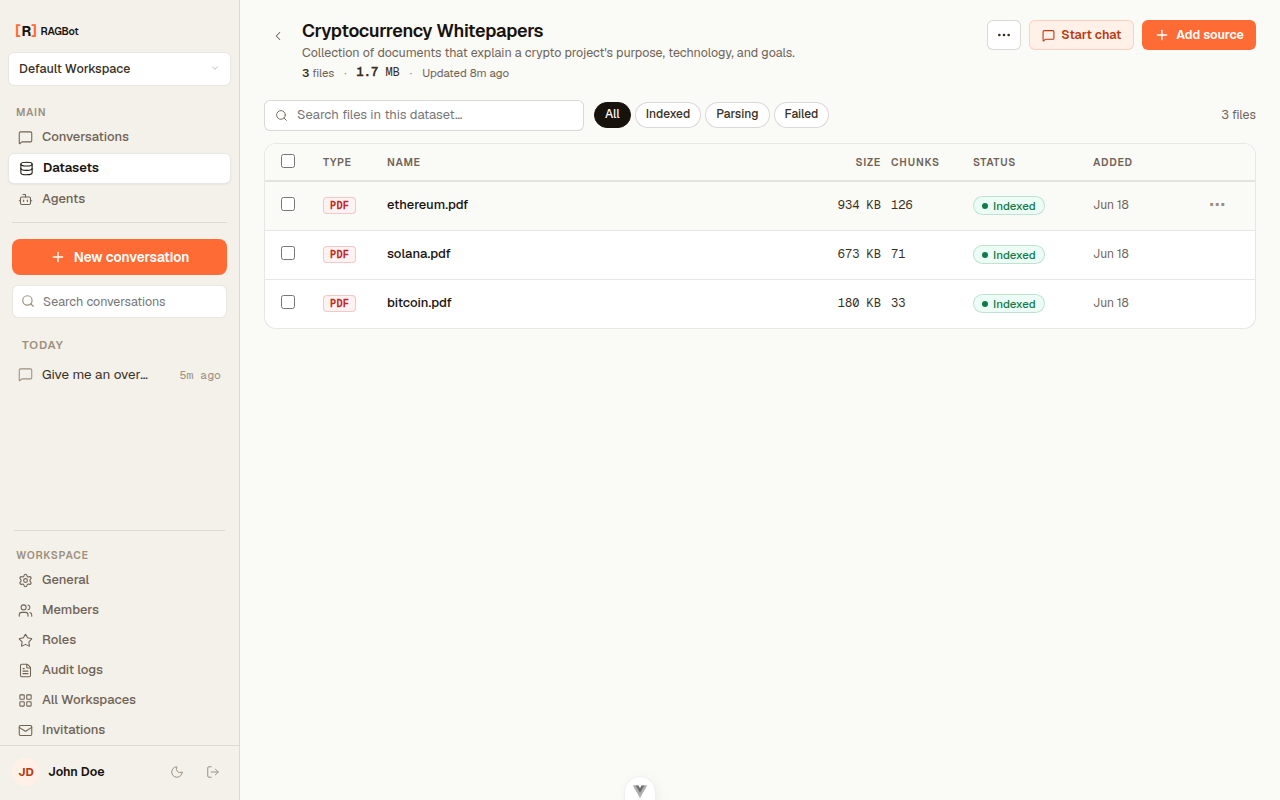
Open a dataset to see its files, each with type, size, chunk count, status, and date.
Dataset detail
A dataset's files, with status filters and Start chat / Add source actions.

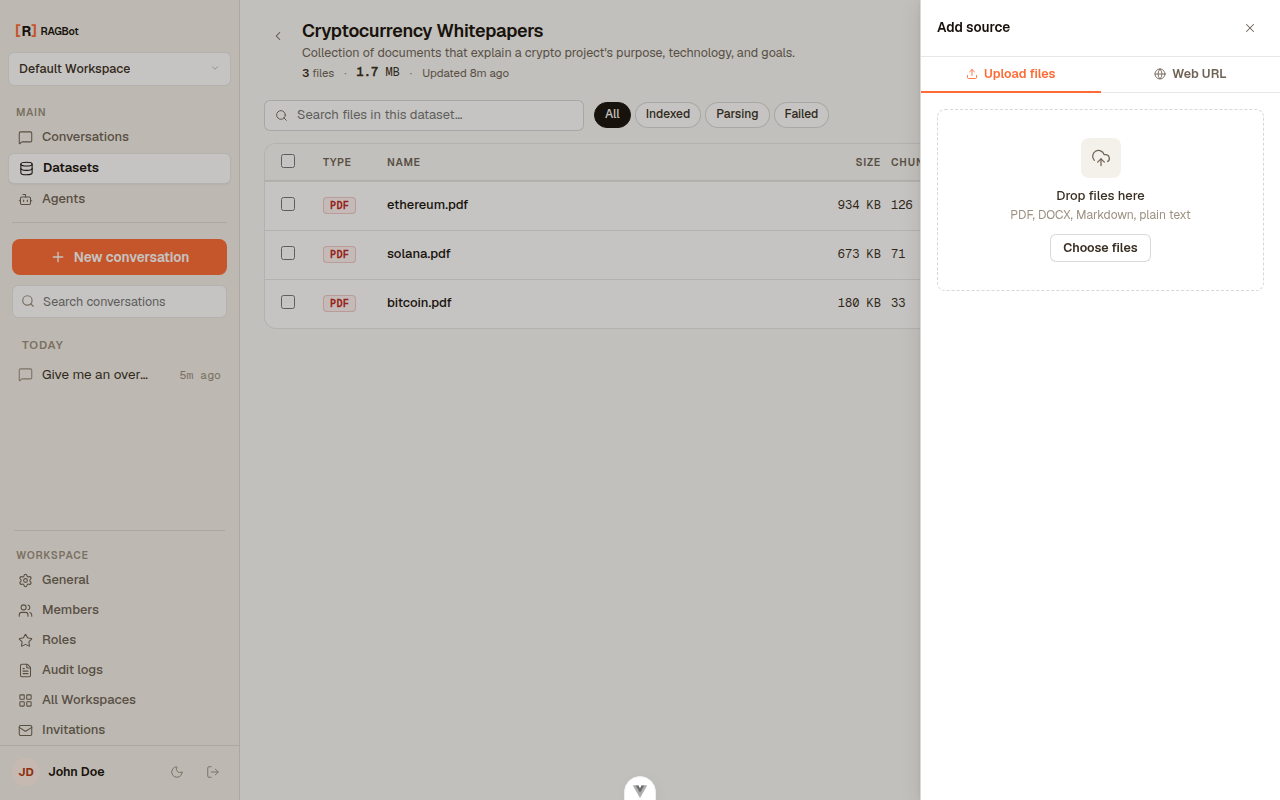
Add documents through the Add source panel — upload files or scrape a web page.
Add source
The Add source panel: an Upload files tab and a Web URL tab.

Click a file to explore it: its info, auto-generated questions, and a preview of the indexed passages.
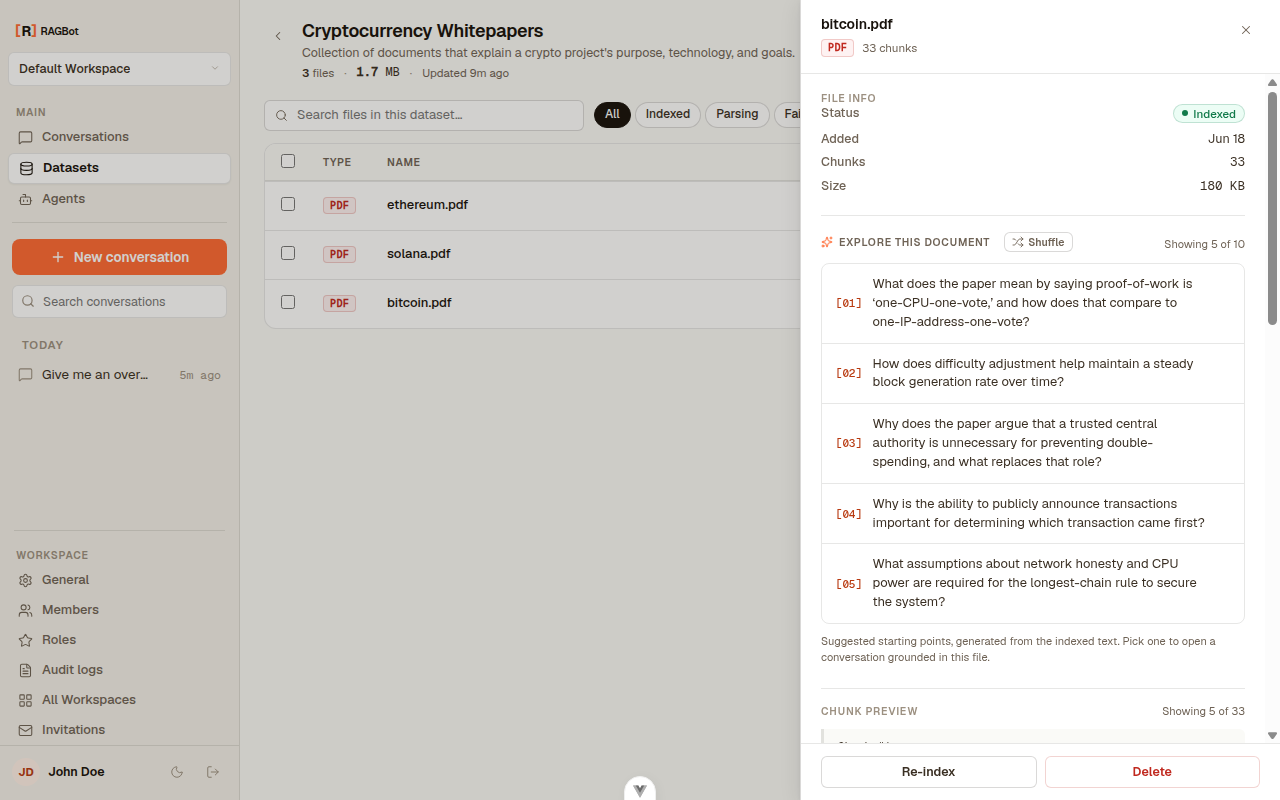
File detail
The file detail panel — file info, 'Explore this document' questions, and a chunk preview.

Agents

Agents are the assistants you talk to — each a persona plus a model. Every workspace ships a ready-to-use default.
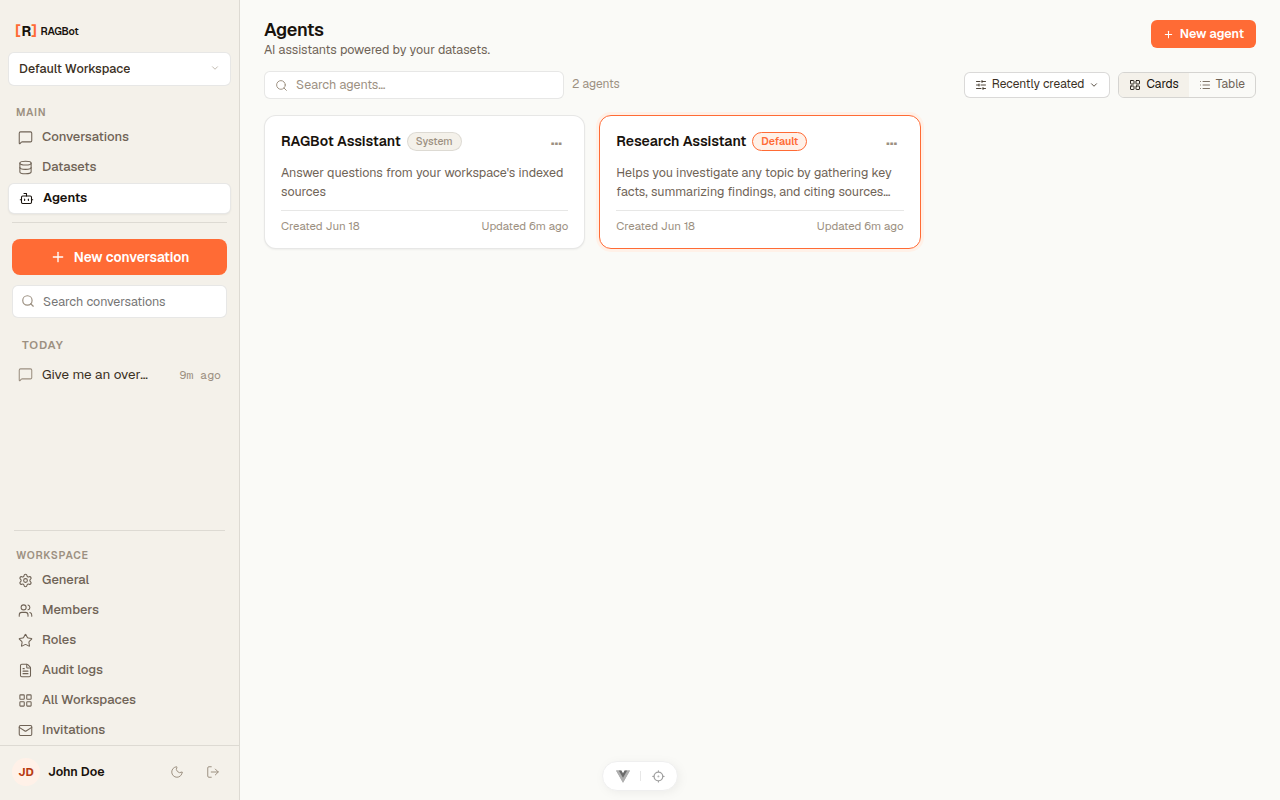
Agents
The Agents area, showing the default system agent.
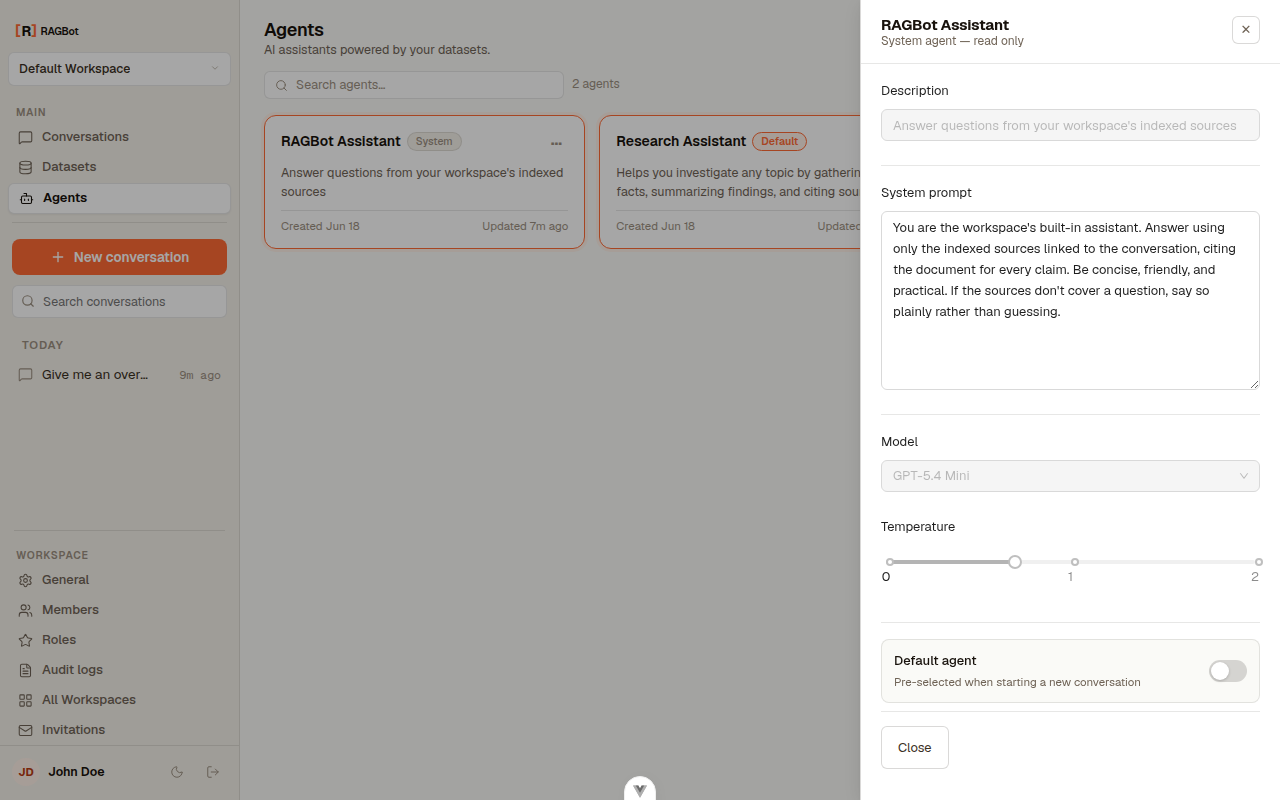
Agent settings
An agent's settings: system prompt, model, and temperature.

Conversations & chat

Conversations lists your chat history, grouped by day, each tagged with its agent and source count.
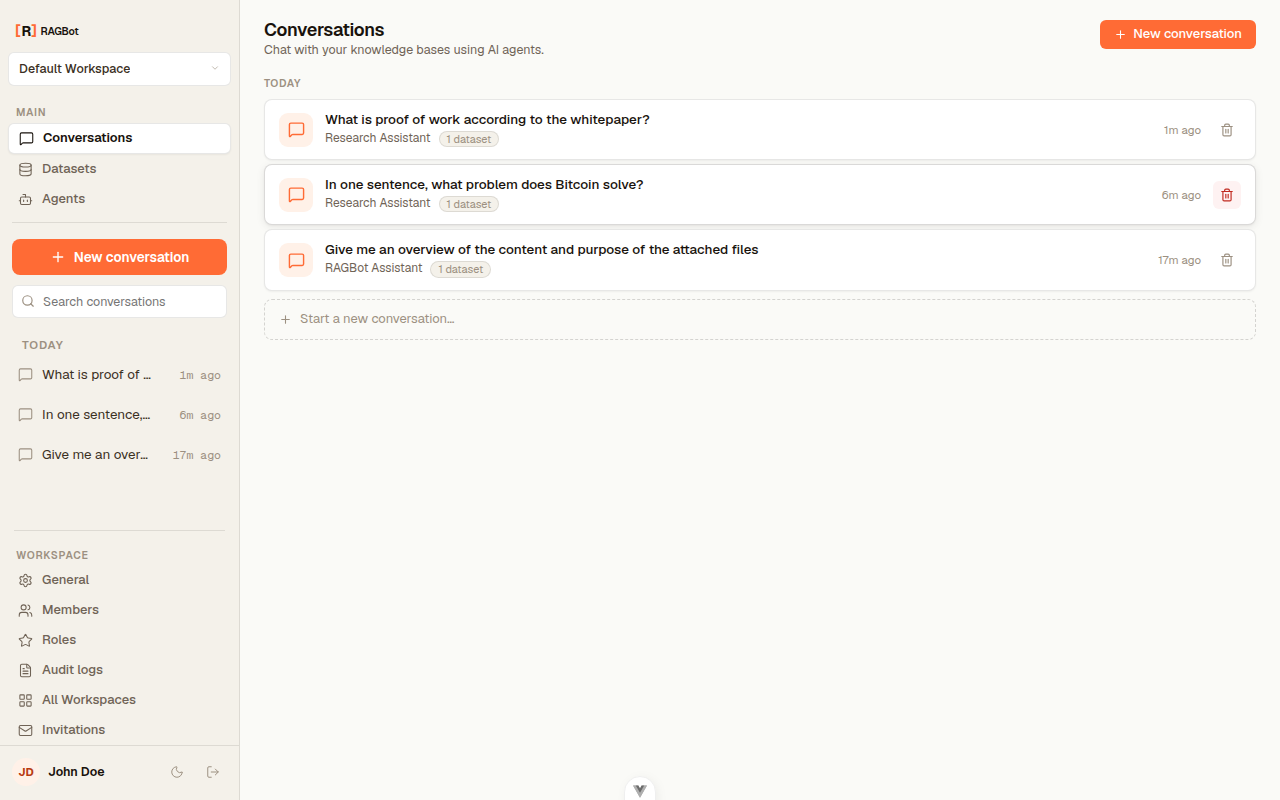
Conversations
Conversation history for the workspace.

A new chat opens on a clean welcome screen. Pick an agent and choose which datasets to search.
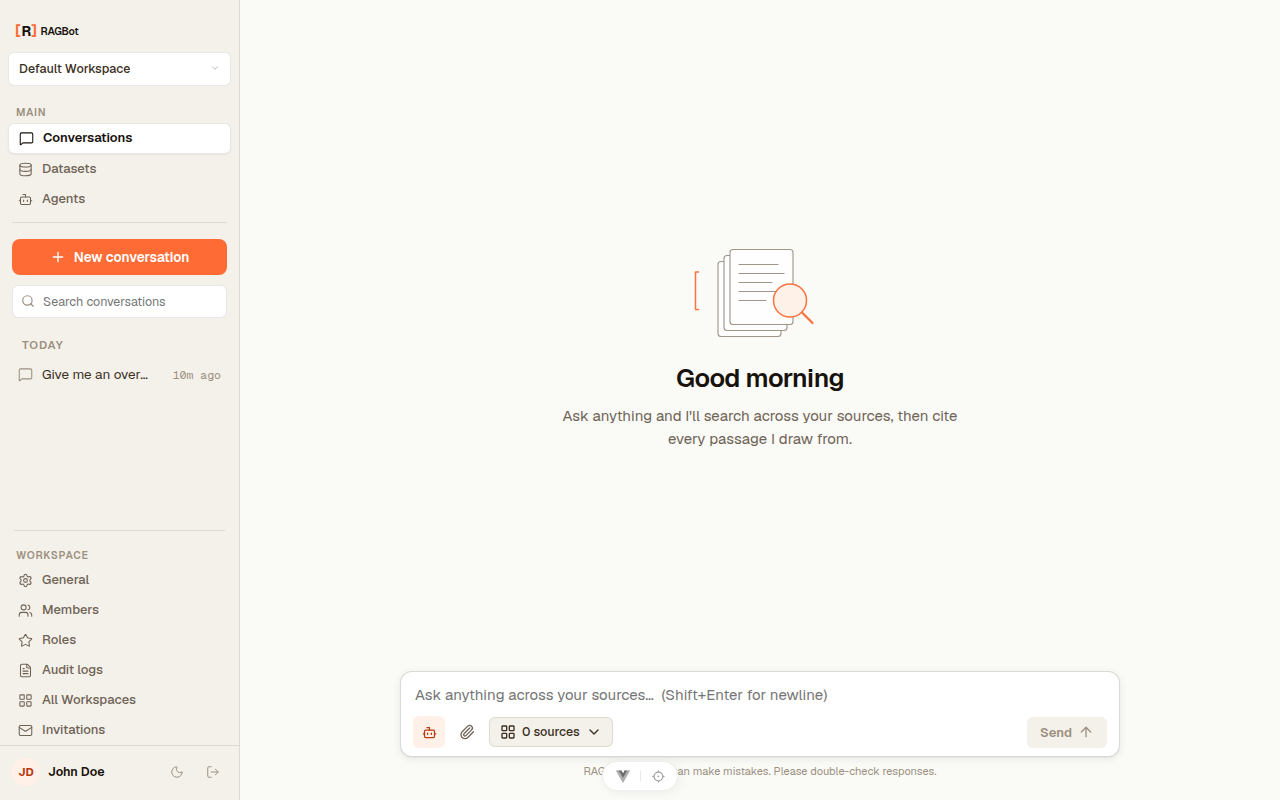
New conversation
Starting a fresh conversation.
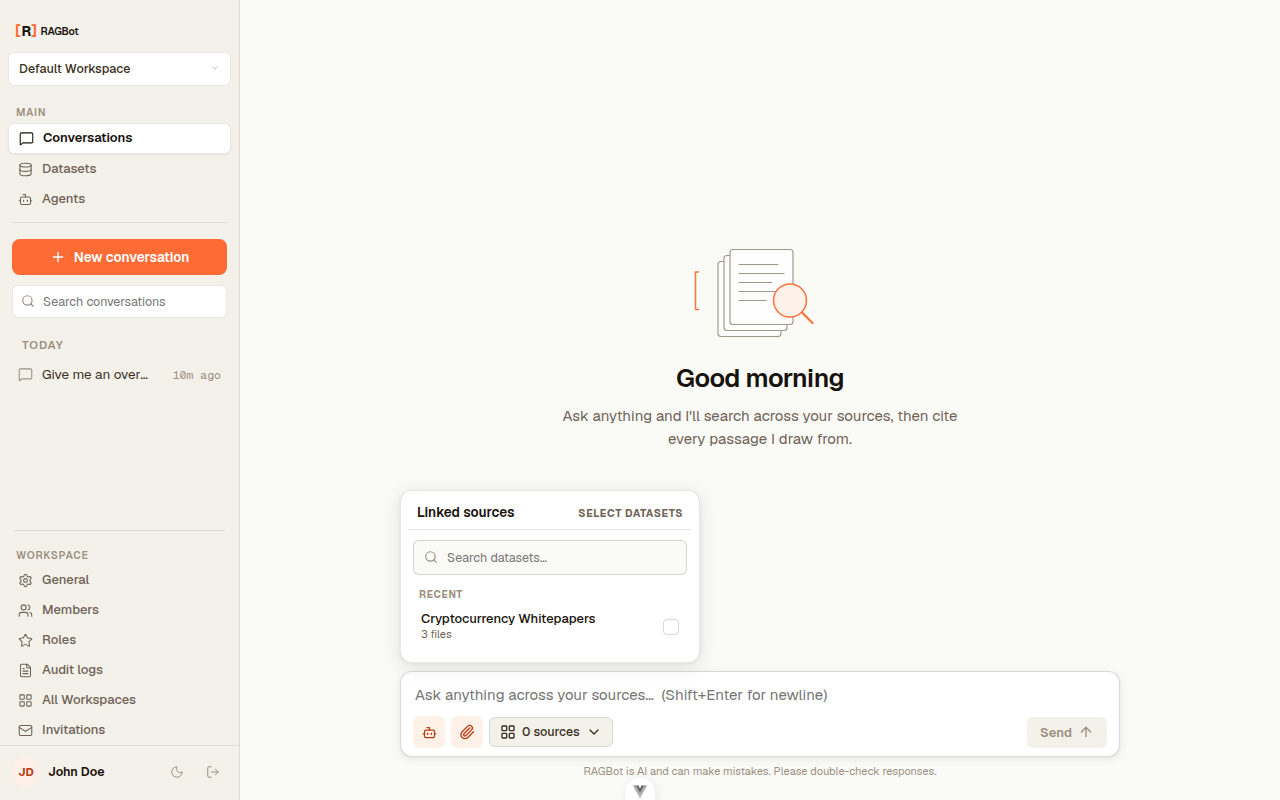
Choose sources
The source picker — select the datasets this conversation can read.

Ask a question and the answer streams in, with inline citations you can open.
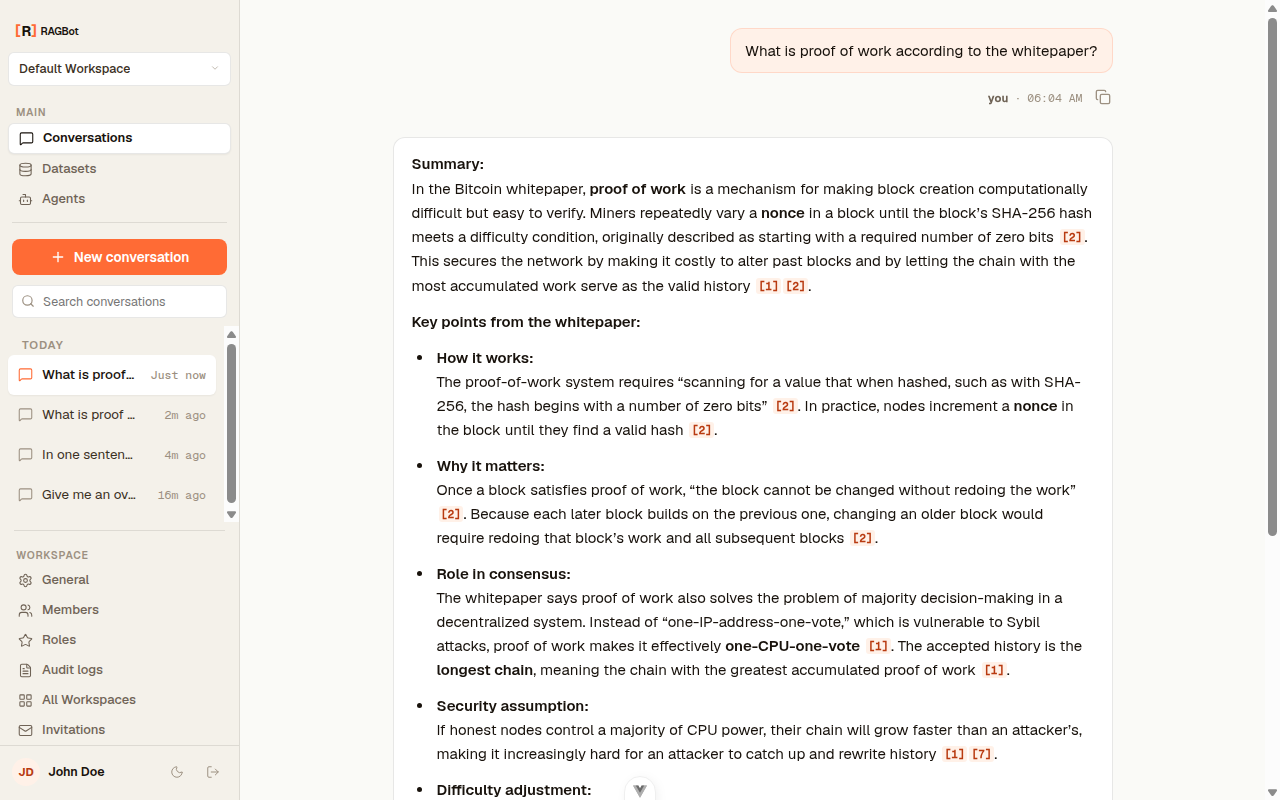
Conversation
An answer with inline citations and a per-message source toggle.
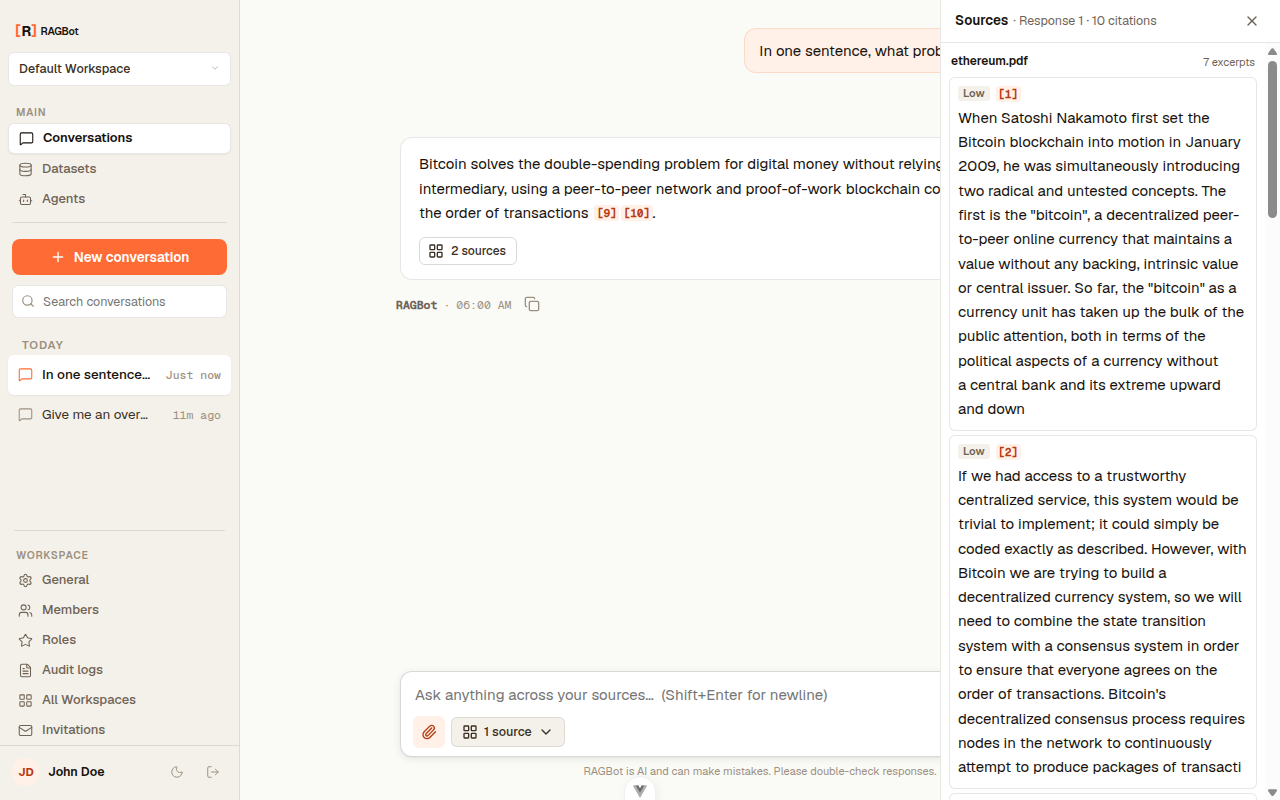
Sources panel
The citations panel — passages grouped by source file, each with a relevance label and the exact text.

Workspace settings

Settings gathers everything an Owner or Admin manages. The General tab renames or deletes the workspace.
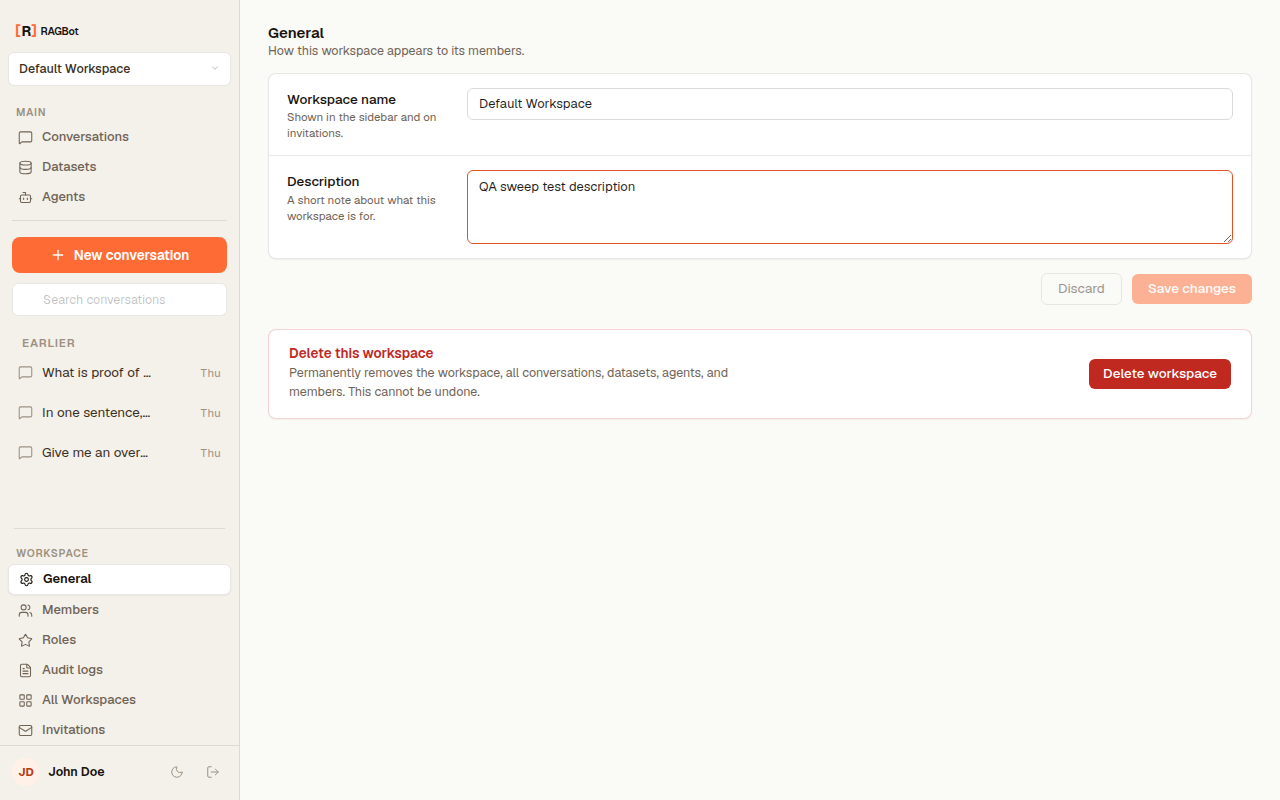
Settings · General
General workspace settings.

Members manages who's in the workspace and their roles.
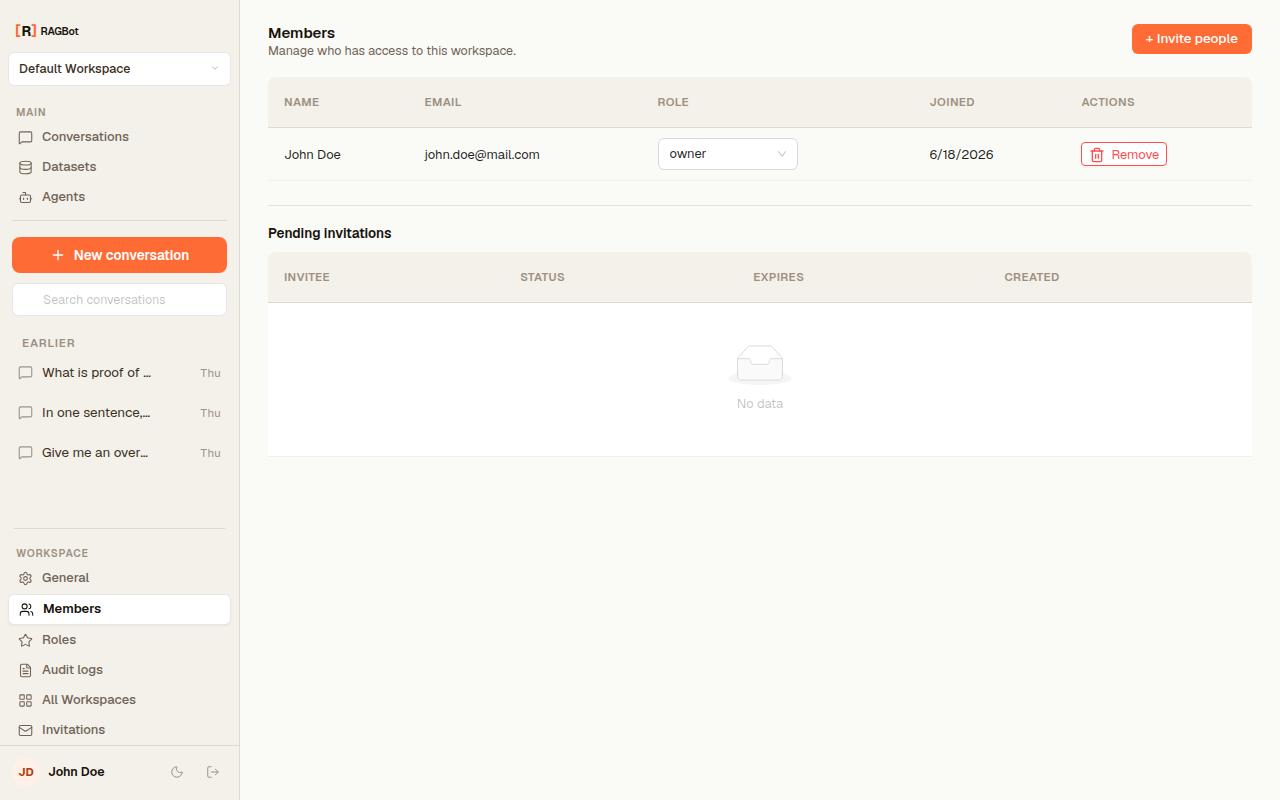
Settings · Members
Members and pending invitations.

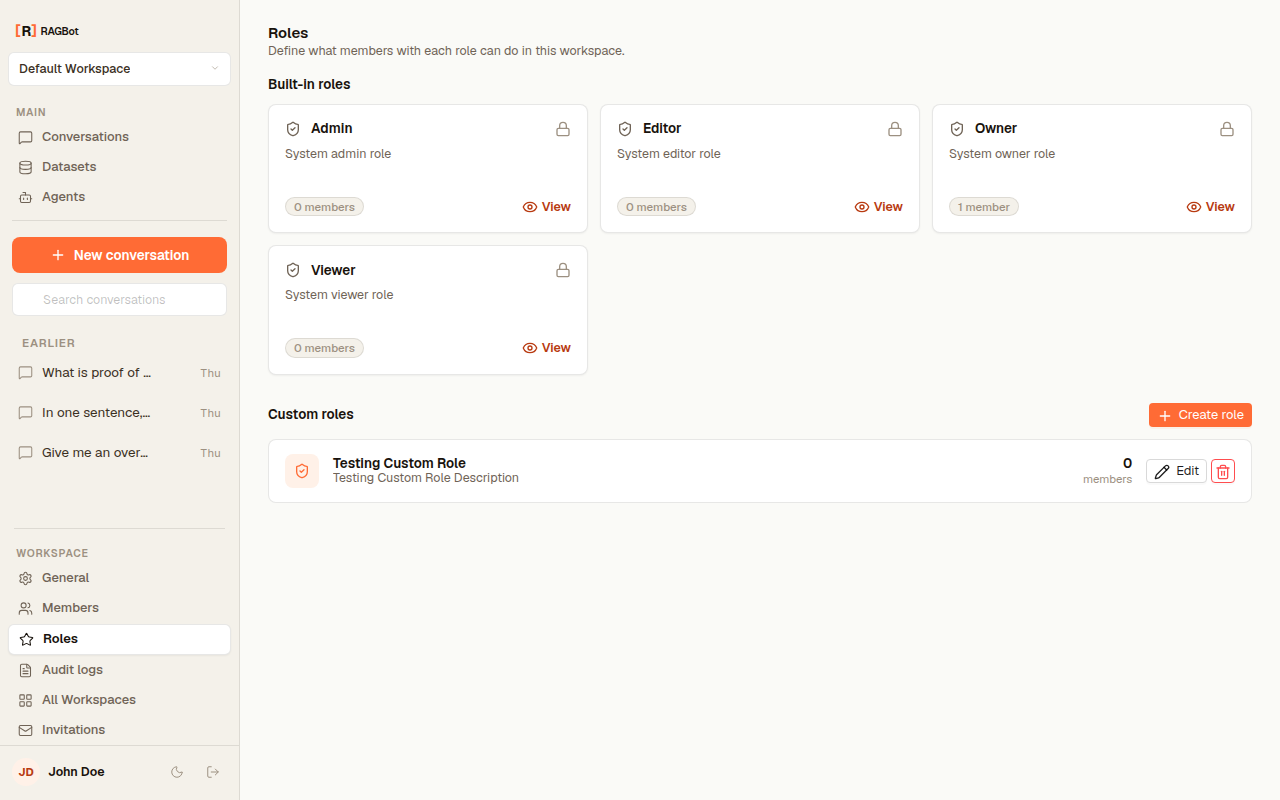
Roles shows the four built-in roles and lets you create custom ones.
Settings · Roles
Built-in and custom roles.

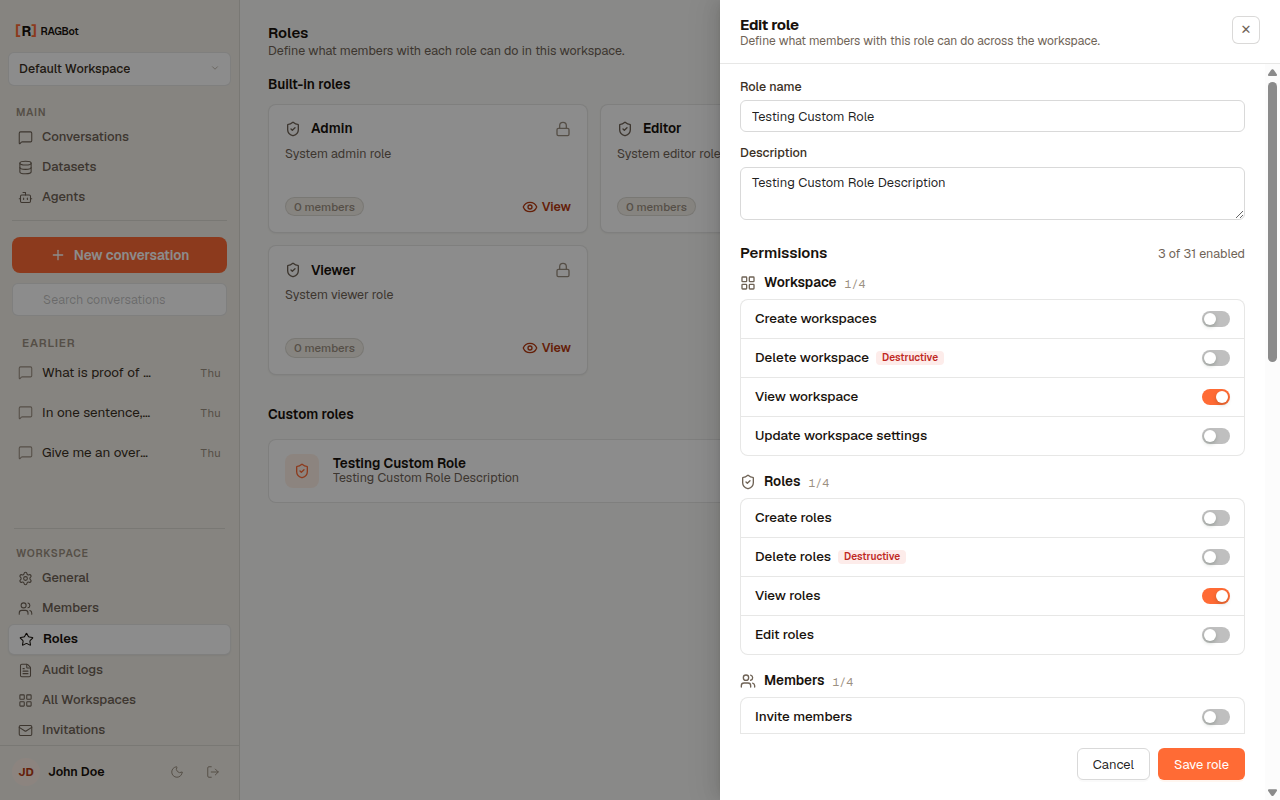
Open a role to see its permissions. Built-in roles are read-only; create a custom role to set your own.
Role permissions
The permission matrix, grouped by resource. Destructive permissions are flagged.

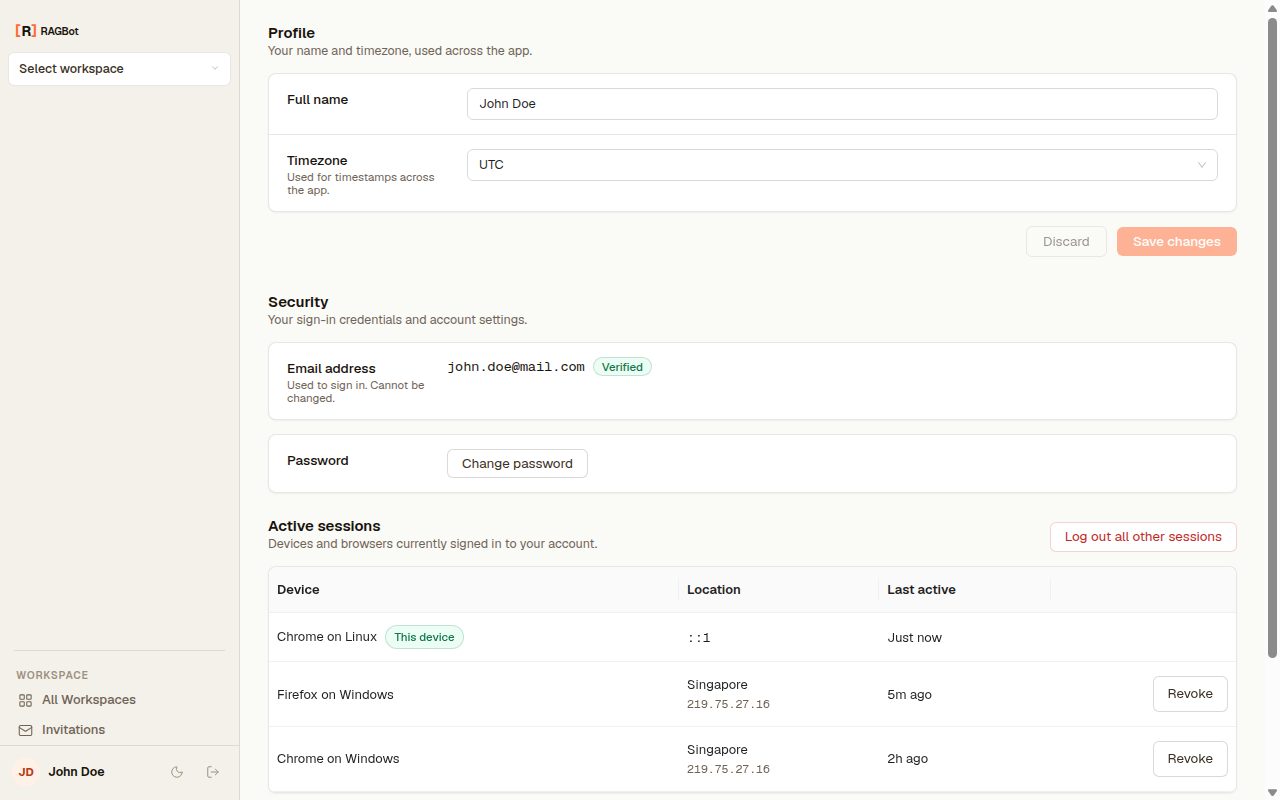
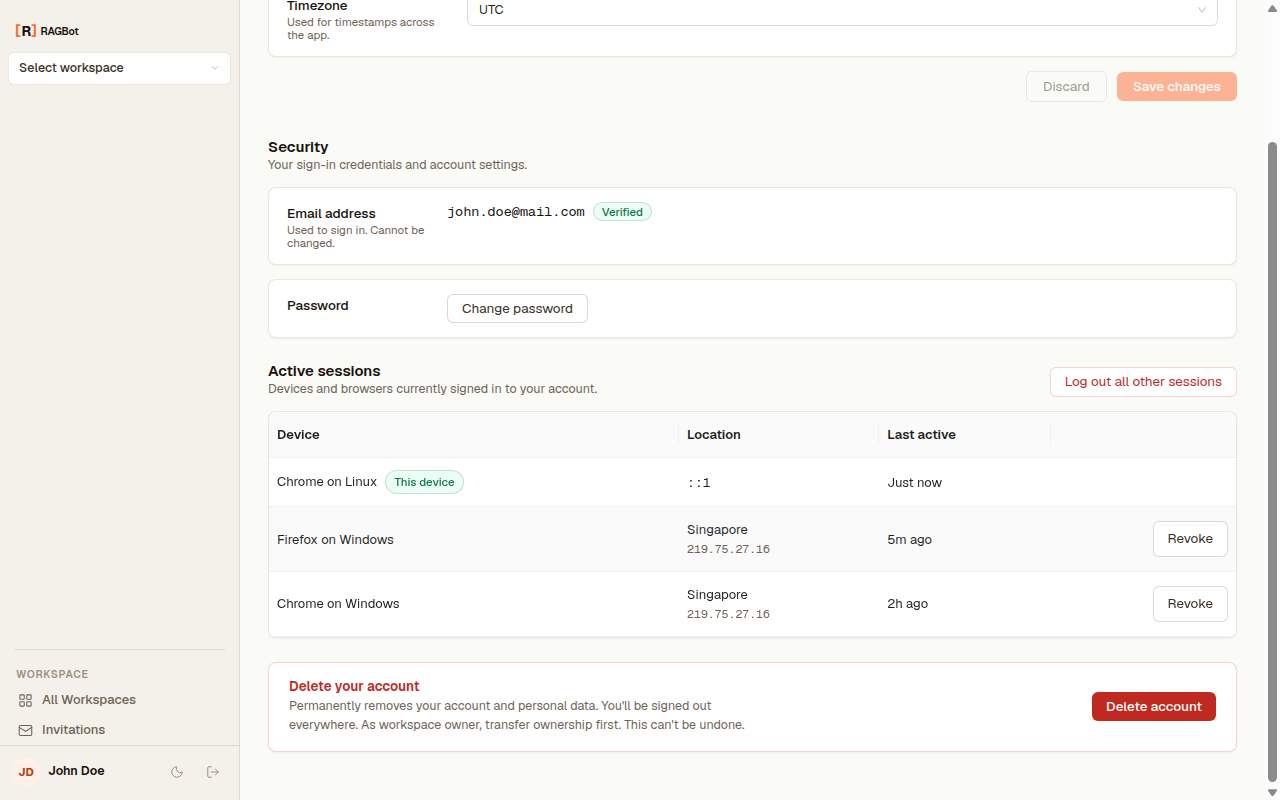
Profile and Account hold your personal settings — name, timezone, password, and the devices signed in to your account — covered in Your profile & account.
Settings · Profile
Your profile: display name and timezone.
Settings · Account
Your account: change your password, manage the devices signed in to your account, or delete your account.

Audit logs

Finally, Audit logs records every change in the workspace — see Audit logs.
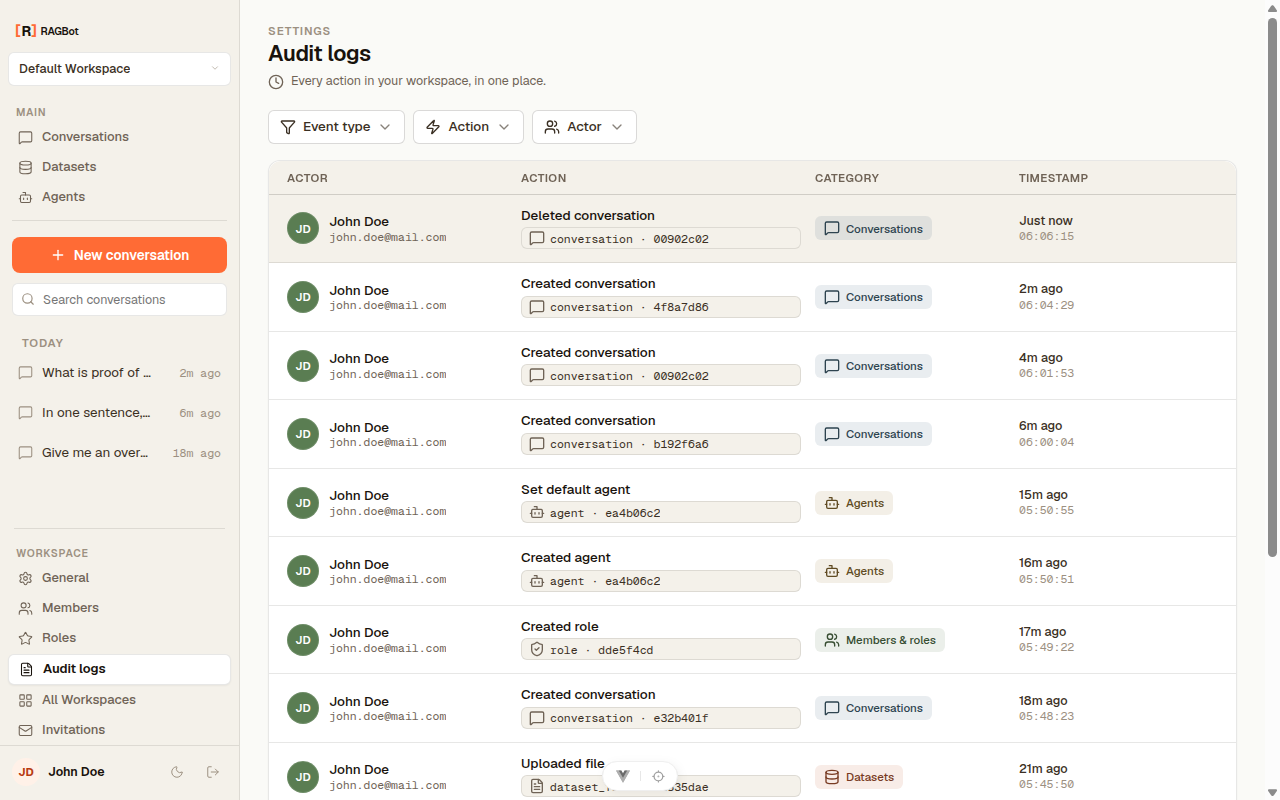
Audit logs
A complete, append-only record of workspace activity.